
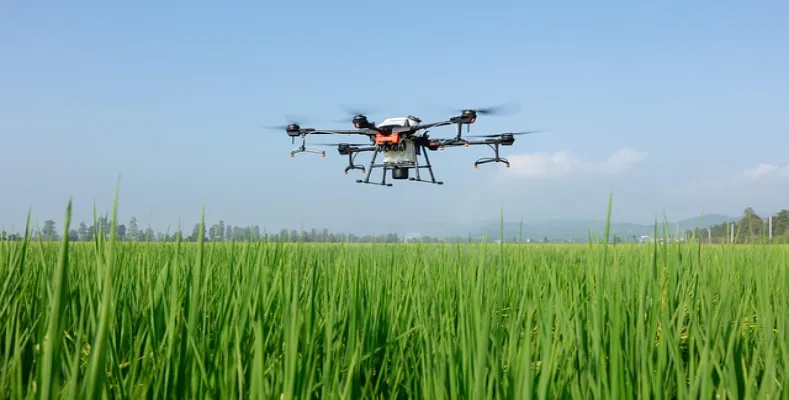
What is the Latest Technology in Farming? | Latest Technology in Farming, Revolutionizing Agriculture for the Future.
Agriculture, one of the oldest human practices, is undergoing a massive transformation thanks to the latest technological advancements. (What is the Latest Technology in Farming?)
As global food demand rises and environmental concerns grow, the farming industry is embracing innovative tools and methods to increase productivity, reduce waste, and promote sustainability. Here’s a look at some of the most impactful technologies currently shaping modern agriculture. (What is the Latest Technology in Farming?)
Table of Contents
Precision Agriculture
Precision agriculture is at the forefront of technological change in farming. Using GPS, remote sensing, and data analytics, farmers can now monitor and manage their fields with pinpoint accuracy.
This method helps determine exactly how much water, fertilizer, or pesticide each part of a field needs, reducing input costs and minimizing environmental impact. Drones and satellite imagery also play a vital role in tracking crop health, identifying disease outbreaks, and assessing soil conditions. (What is the Latest Technology in Farming?)
Internet of Things (IoT) and Smart Farming
The Internet of Things (IoT) has enabled the rise of smart farming. Connected sensors placed in fields or on livestock can collect real-time data on soil moisture, temperature, humidity, and even animal behavior.
This information is then transmitted to central systems where it can be analyzed for quick decision-making. For example, smart irrigation systems can automatically adjust water levels based on weather forecasts and soil data, improving efficiency and conserving water. (What is the Latest Technology in Farming?)
Robotics and Automation
Farm automation is rapidly evolving with the use of robotics. Machines such as robotic planters, harvesters, and weeders are becoming increasingly common, reducing the need for manual labor and increasing speed and accuracy.
Autonomous tractors equipped with AI and GPS can work day and night with minimal human supervision. In dairy farming, robotic milking systems allow cows to be milked whenever they choose, improving animal welfare and productivity. (What is the Latest Technology in Farming?)
Artificial Intelligence and Machine Learning
AI and machine learning are being used to analyze vast amounts of data collected from farms. These technologies help in predictive analytics—forecasting weather patterns, crop yields, and potential pest infestations.
AI-powered tools can also identify plant diseases through image recognition and suggest the most effective treatment methods. This leads to faster responses and more informed decisions, ultimately boosting yields and reducing losses. (What is the Latest Technology in Farming?)
Vertical Farming and Hydroponics
With urbanization reducing available farmland, vertical farming has emerged as a viable solution. This method involves growing crops in stacked layers, often indoors, using LED lighting and climate control systems.
Hydroponics and aeroponics—soilless farming techniques—allow plants to grow using nutrient-rich water or mist. These systems use up to 90% less water than traditional farming and can produce food year-round in urban environments. (What is the Latest Technology in Farming?)
Gene Editing and Biotechnology
Genetic engineering and gene editing technologies like CRISPR are helping create crops that are more resistant to diseases, pests, and harsh weather conditions.
Scientists can now develop high-yielding varieties with improved nutritional profiles. These advancements not only increase food security but also reduce the need for chemical inputs, making farming more sustainable. (What is the Latest Technology in Farming?)
Blockchain in Agriculture
Blockchain technology is being adopted to improve transparency and traceability in the food supply chain. It allows every step—from farm to fork—to be recorded and verified. This can help farmers get fair prices, reduce fraud, and assure consumers about the origin and quality of their food. Smart contracts can also automate payments and transactions, reducing administrative burden.
Conclusion
The integration of technology into farming is not just a trend—it’s a necessity. These innovations are helping to address some of the most pressing challenges in agriculture: labor shortages, climate change, resource scarcity, and global food demand.
While there are challenges in adopting and scaling these technologies, especially in developing regions, the potential benefits are enormous. As farming continues to evolve, technology will play a critical role in feeding the world more efficiently and sustainably. (What is the Latest Technology in Farming?)
Related Posts
Visit our Etopcollection and “Dnyanjyot” educational website.