
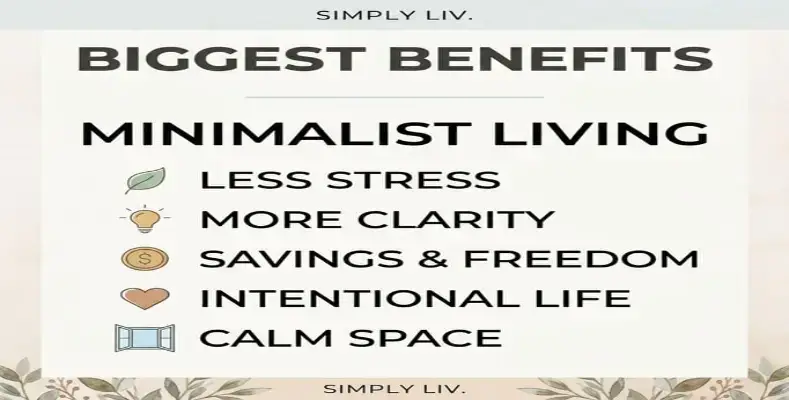
Biggest Benefits of Minimalist Living | A minimalist lifestyle is crucial for reducing stress, increasing concentration, and saving money and time by consciously carrying fewer belongings.
In a world filled with constant notifications, endless shopping temptations, and packed schedules, minimalist living has become more than just a trend—it’s a practical lifestyle choice. Minimalism is about intentionally choosing what truly adds value to your life and letting go of everything that creates unnecessary clutter, stress, or distraction.
Minimalist living doesn’t mean living with only a chair and a mattress on the floor. It means simplifying your surroundings, habits, and priorities so you can focus on what matters most. Whether it’s reducing physical clutter, cutting down on commitments, or being mindful of purchases, minimalism offers powerful benefits that can transform your life.
Here are the biggest benefits of minimalist living and why more people are embracing this simple yet impactful lifestyle. (Biggest Benefits of Minimalist Living)
Table of Contents
Reduces Stress and Anxiety
One of the biggest advantages of minimalist living is reduced stress. Cluttered spaces often create mental clutter. When your environment is messy and overloaded with unnecessary items, your brain constantly processes that chaos, which can lead to feelings of overwhelm.
A minimalist home feels calm, organized, and peaceful. When everything has its place and unnecessary distractions are removed, it becomes easier to relax and focus.
Imagine coming home after a long day to a clean, clutter-free space. Instead of feeling burdened by piles of laundry, unopened packages, or crowded shelves, you feel at ease. (Biggest Benefits of Minimalist Living)
Minimalism creates an atmosphere that supports mental clarity and emotional well-being.
Saves Money
Minimalist living naturally encourages intentional spending. Instead of buying things impulsively, minimalists focus on purchasing only what they truly need or deeply value.
This shift in mindset can significantly improve your financial health.
When you stop chasing trends, unnecessary gadgets, or impulse purchases, you:
- Spend less money
- Save more consistently
- Reduce debt
- Make smarter financial decisions
Minimalism helps you distinguish between wants and needs. Over time, this awareness can lead to greater financial freedom and reduced financial stress.
Many people discover that owning fewer but higher-quality items is more satisfying and cost-effective than constantly replacing cheap, unnecessary products. (Biggest Benefits of Minimalist Living)
Creates More Time
How much time do we waste managing our possessions?
Think about it:
- Cleaning and organizing clutter
- Shopping for unnecessary things
- Maintaining items we rarely use
- Searching for misplaced belongings
Minimalist living eliminates much of this wasted effort.
With fewer possessions, there’s less to clean, organize, repair, and manage. This frees up valuable time that can be spent on activities that truly matter, such as:
- Spending time with family
- Pursuing hobbies
- Learning new skills
- Resting and recharging
Minimalism allows you to reclaim your schedule and focus on experiences instead of endless maintenance.
Improves Focus and Productivity
A cluttered environment often leads to a cluttered mind.
When your surroundings are filled with distractions, your ability to concentrate decreases. Minimalist spaces promote clarity and focus by removing unnecessary visual noise.
This is especially beneficial for people who work or study from home.
A clean, simple workspace helps improve:
- Concentration
- Creativity
- Decision-making
- Task completion
Minimalist living also extends beyond physical spaces. Simplifying your schedule, reducing digital distractions, and prioritizing essential tasks can dramatically increase productivity.
When you remove the non-essential, you create room for meaningful progress. (Biggest Benefits of Minimalist Living)
Encourages Better Decision-Making
Every item you own requires attention. Every choice you make consumes mental energy.
This is known as decision fatigue—the mental exhaustion caused by making too many choices throughout the day.
Minimalist living reduces unnecessary decisions.
For example:
- A simplified wardrobe makes getting dressed easier
- Fewer possessions mean fewer choices about storage and maintenance
- A streamlined routine reduces daily stress
By removing small, repetitive decisions, you preserve mental energy for more important matters like career goals, relationships, and personal growth.
This clarity leads to better, more intentional decision-making in all areas of life. (Biggest Benefits of Minimalist Living)
Promotes Gratitude and Contentment
Minimalism teaches you to appreciate what you already have instead of constantly chasing more.
Modern consumer culture often promotes the idea that happiness comes from buying the next new thing. Minimalist living challenges this belief.
When you own fewer possessions, you tend to value each item more. You become more mindful of your choices and more grateful for what serves you.
This shift encourages contentment.
Instead of always seeking external satisfaction through purchases, you begin finding joy in:
- Meaningful relationships
- Personal achievements
- Quiet moments
- Simple pleasures
Minimalism helps you realize that happiness often comes from less, not more. (Biggest Benefits of Minimalist Living)
Supports Environmental Sustainability
Minimalist living is naturally eco-friendly.
By consuming less and buying intentionally, you reduce waste and lower your environmental impact.
Minimalists often choose:
- Durable, high-quality products
- Reusable alternatives
- Sustainable brands
- Second-hand or recycled items
This reduces landfill waste and decreases demand for excessive production.
Even small changes—like buying fewer clothes, reducing plastic use, or avoiding unnecessary packaging—can contribute to a healthier planet.
Minimalism aligns personal well-being with environmental responsibility. (Biggest Benefits of Minimalist Living)
Strengthens Relationships
When life becomes less focused on possessions, it becomes easier to focus on people.
Minimalist living encourages prioritizing experiences and connections over material things.
Instead of spending weekends shopping or organizing clutter, you may spend that time:
- Having meaningful conversations
- Traveling
- Sharing meals
- Creating memories
Minimalism also reduces household tension caused by mess, disorganization, and financial stress.
A simpler lifestyle often leads to deeper, more intentional relationships with family and friends. (Biggest Benefits of Minimalist Living)
Increases Freedom and Flexibility
Owning too much can feel surprisingly restrictive.
The more possessions you have, the more tied down you become. Moving, traveling, or making life changes becomes more complicated.
Minimalist living creates freedom.
With fewer belongings and lower expenses, you gain flexibility to:
- Relocate easily
- Change careers
- Travel more
- Take risks and pursue passions
Minimalism removes unnecessary burdens, making it easier to adapt and embrace new opportunities.
Conclusion
The biggest benefits of minimalist living go far beyond having a tidy home.
Minimalism offers a path to less stress, greater financial freedom, improved focus, stronger relationships, and a deeper sense of contentment.
It’s not about deprivation—it’s about intentionality.
By removing what no longer serves you, you create space for what truly matters.
Whether you start by decluttering one room, reducing impulse purchases, or simplifying your daily routine, every small step toward minimalism can lead to meaningful positive change.
Sometimes, having less is exactly what helps us live more. (Biggest Benefits of Minimalist Living)
- Overrated Classic Books in India
- Who Are Some Underrated People?
- How to Discover Your Ideal Superpower
Visit our Etopcollection and “Dnyanjyot” educational websites.