
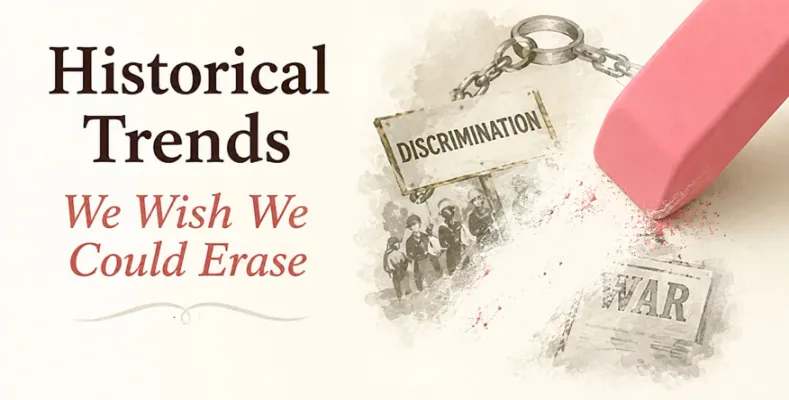
Historical Trends We Wish We Could Erase | Colonization, slavery, systemic discrimination, world wars, and economic depressions remain historical trends we desperately wish erased.
History is filled with remarkable achievements, but it also carries painful chapters that remind us of humanity’s darkest moments. While learning from history is essential, there are certain historical trends we wish had never existed. These practices caused suffering, inequality, and long-lasting damage to societies across the world. Understanding these events helps us prevent similar mistakes in the future. Here are some of the most unfortunate historical trends we wish we could erase. (Historical Trends We Wish We Could Erase)
Table of Contents
1. Slavery and Human Exploitation
Slavery remains one of the darkest periods in human history. Millions of people were captured, sold, and forced to work under inhumane conditions without freedom or basic rights. Families were separated, cultures were destroyed, and countless lives were lost. Although slavery has been abolished in most countries, its impact still affects societies today through inequality and discrimination. (Historical Trends We Wish We Could Erase)
Why It Should Be Erased
- Violated basic human rights.
- Destroyed families and communities.
- Left lasting social and economic inequalities.
2. Colonialism and Imperialism
Colonial powers occupied foreign lands, exploited natural resources, and controlled indigenous populations for centuries. Many cultures lost their traditions, languages, and independence due to colonial rule.
Negative Effects
- Cultural destruction.
- Economic exploitation.
- Political instability in former colonies.
- Long-term poverty and conflicts.
3. World Wars
The First and Second World Wars resulted in the deaths of over 80 million people combined. Entire cities were destroyed, economies collapsed, and generations suffered from trauma.
Lessons Learned
- The importance of diplomacy.
- Global cooperation prevents conflicts.
- Peace is more valuable than military victory.
4. Genocide and Ethnic Cleansing
History has witnessed horrifying acts of genocide, where entire communities were targeted because of their ethnicity, religion, or nationality. These crimes left permanent scars on humanity.
Consequences
- Massive loss of innocent lives.
- Psychological trauma.
- Cultural extinction.
- International humanitarian crises.
5. Discrimination Based on Race
Racism has existed for centuries, leading to segregation, violence, and unequal opportunities. People have been judged by their skin color instead of their abilities.
Lasting Impact
- Social inequality.
- Educational gaps.
- Economic disparities.
- Continued prejudice in many societies.
6. Gender Inequality
For much of history, women were denied education, voting rights, property ownership, and career opportunities. Gender discrimination limited societal progress and personal freedom.
Why Equality Matters
- Promotes economic growth.
- Encourages innovation.
- Builds stronger communities.
- Ensures equal opportunities for everyone.
7. Child Labor
During the Industrial Revolution and even today in some regions, children have been forced into dangerous work instead of attending school. Child labor steals childhood and limits future opportunities.
Harmful Effects
- Poor education.
- Health problems.
- Physical injuries.
- Cycle of poverty.
8. Religious Persecution
Many people have faced violence and discrimination because of their religious beliefs. Religious intolerance has sparked wars, forced migrations, and countless human rights violations.
Better Alternative
- Religious freedom.
- Mutual respect.
- Peaceful coexistence.
- Cultural diversity.
9. Environmental Destruction
Industrial expansion brought economic growth but also severe environmental damage. Deforestation, pollution, and excessive resource extraction continue to threaten our planet.
Environmental Consequences
- Climate change.
- Wildlife extinction.
- Air and water pollution.
- Loss of biodiversity.
10. Political Oppression and Dictatorships
Throughout history, authoritarian governments have silenced freedom of speech, imprisoned political opponents, and denied citizens their basic rights.
Why Democracy Matters
- Protects human rights.
- Encourages accountability.
- Supports free expression.
- Promotes fair governance.
- (Historical Trends We Wish We Could Erase)
Lessons Modern Society Can Learn
Although these historical trends caused immense suffering, they also provide valuable lessons for future generations.
Important Takeaways
- Respect human rights at all times.
- Promote equality regardless of race, gender, or religion.
- Encourage education to combat ignorance.
- Protect democratic values.
- Preserve the environment.
- Resolve conflicts through dialogue instead of violence.
- (Historical Trends We Wish We Could Erase)
How Education Prevents History from Repeating
Education plays a vital role in ensuring that future generations understand the mistakes of the past. Schools, museums, documentaries, and historical research help preserve important lessons. (Historical Trends We Wish We Could Erase)
Benefits of Learning History
- Builds empathy.
- Encourages critical thinking.
- Promotes tolerance.
- Strengthens global cooperation.
- Prevents misinformation.
- (Historical Trends We Wish We Could Erase)
Conclusion
History cannot be changed, but it can guide our future. Trends such as slavery, colonialism, war, discrimination, child labor, environmental destruction, and political oppression remind us of the consequences of injustice and intolerance. By studying these painful chapters, society can work toward a future built on equality, peace, freedom, and sustainability. Rather than repeating history’s mistakes, humanity must strive to create a world where compassion, respect, and justice prevail for all. (Historical Trends We Wish We Could Erase)
- What Shapes Our Personality?
- Dinner with Fictional Characters
- Timeless Song Lyrics That Resonate
- Best Funny Excuses for Any Situation
- Apps That Consume Most Screen Time
- 10 Funniest Misunderstandings in History
Visit our Etopcollection and “Dnyanjyot” educational website.