
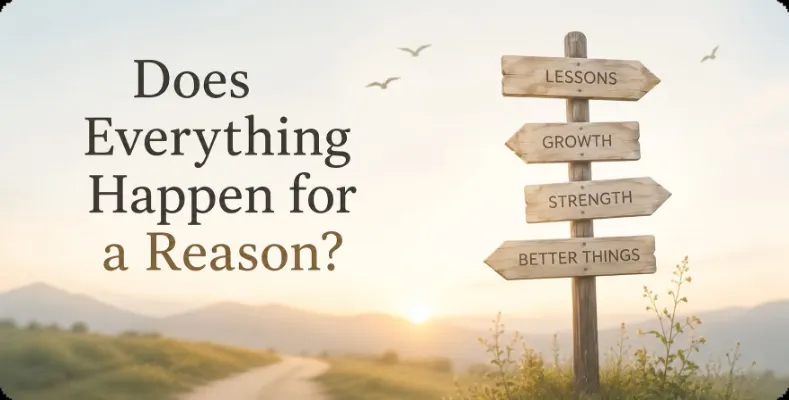
Does Everything Happen for a Reason? | No, events have scientific causes, but humans assign personal meaning to find comfort and grow.
Have you ever wondered why certain events happen in your life? Whether it’s a career setback, a failed relationship, or an unexpected opportunity, many people ask the same question: Does everything happen for a reason? This timeless belief has inspired philosophers, spiritual leaders, and psychologists for centuries. While there is no single answer, exploring different perspectives can help us better understand life’s challenges and opportunities.
Table of Contents
What Does “Everything Happens for a Reason” Mean?
The phrase suggests that every event in life has a purpose, even if we don’t understand it immediately. Some people believe that life’s experiences are part of a bigger plan, while others think that meaning is something we create after an event occurs.
1. A Spiritual Perspective
Many religions and spiritual traditions teach that life unfolds according to a divine plan. Difficult experiences are often viewed as lessons that strengthen character, increase faith, or prepare individuals for future blessings.
People who hold this belief often find comfort during hard times because they trust that every challenge has a greater purpose. (Does Everything Happen for a Reason?)
2. A Psychological Perspective
Psychologists suggest that finding meaning in difficult experiences can improve emotional well-being. Instead of asking, “Why did this happen to me?” people may ask, “What can I learn from this?”
This mindset promotes resilience, helping individuals recover from setbacks and grow stronger through adversity.
3. The Scientific View
Science generally does not support the idea that every event happens for a predetermined reason. Natural disasters, illnesses, and accidents often result from random circumstances rather than destiny.
However, science does acknowledge that human beings naturally search for patterns and meaning, especially during emotional experiences. (Does Everything Happen for a Reason?)
4. Why People Believe Everything Happens for a Reason
There are several reasons why this belief remains popular:
- It provides hope during difficult times.
- It reduces anxiety about uncertainty.
- It encourages personal growth.
- It helps people accept situations they cannot control.
- It creates a sense of purpose and optimism.
- (Does Everything Happen for a Reason?)
5. Arguments Against the Idea
Not everyone agrees that everything happens for a reason. Critics argue that:
- Many tragic events appear completely random.
- Believing everything is meant to happen may discourage personal responsibility.
- It can minimize the pain experienced by people facing genuine hardships.
Instead, some believe that while events may be random, our response to them gives life meaning. (Does Everything Happen for a Reason?)
6. Can Bad Experiences Lead to Good Outcomes?
Even painful situations can produce positive changes over time. For example:
- Losing a job may lead to a better career.
- A failed relationship may help someone find a healthier partner.
- Personal struggles often build resilience and emotional strength.
Although the original event may not have happened “for a reason,” the lessons learned can become valuable. (Does Everything Happen for a Reason?)
7. Creating Your Own Meaning
Whether everything happens for a reason or not, you always have the power to decide how you respond. Growth often comes from reflection, learning, and perseverance rather than the event itself.
Instead of focusing solely on why something happened, consider asking:
- What did I learn?
- How has this changed me?
- What positive action can I take now?
These questions encourage a healthy, forward-looking mindset. (Does Everything Happen for a Reason?)
Conclusion
So, does everything happen for a reason? The answer depends on personal beliefs, philosophy, and life experiences. Some see destiny or divine purpose in every event, while others believe that life contains randomness and that meaning is something we create ourselves.
Ultimately, whether events are predetermined or accidental, our choices, attitude, and ability to learn from experiences shape our future. Rather than searching endlessly for reasons, focusing on growth, resilience, and hope can help turn life’s challenges into meaningful opportunities.
- Top Fictional Characters
- Messages from Tomorrow
- What Brings Joy to Your Life?
- Top 10 Home Decoration Styles
- Timeless Song Lyrics That Resonate
- Surprising Basic Skills You Are Missing
Visit our Etopcollection and “Dnyanjyot” educational websites.