
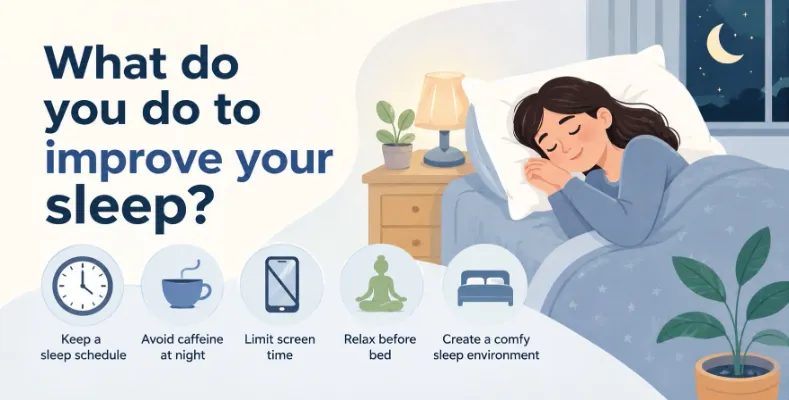
What do you do to improve your sleep? Maintaining a consistent sleep schedule, avoiding caffeine and screens before bedtime, and keeping your bedroom cool and dark.
Getting good sleep is essential for maintaining physical health, mental well-being, and overall productivity. However, many people struggle to fall or stay asleep due to stress, unhealthy habits, or poor sleep routines. If you’ve ever wondered, “What do you do to improve your sleep?”, the answer lies in adopting healthy lifestyle habits and creating a sleep-friendly environment. Here are the most effective ways to improve your sleep naturally.
Table of Contents
Follow a Consistent Sleep Schedule
One of the best ways to improve sleep is to go to bed and wake up at the same time every day, even on weekends. A regular sleep schedule helps regulate your body’s internal clock, making it easier to fall asleep and wake up feeling refreshed.
Tip: Aim for 7–9 hours of sleep each night. (What do you do to improve your sleep?)
Create a Relaxing Bedtime Routine
A calming bedtime routine signals your brain that it’s time to wind down. Activities such as reading a book, taking a warm bath, practicing meditation, or listening to soothing music can help reduce stress and prepare your body for sleep.
Avoid: Intense exercise or stressful activities right before bedtime. (What do you do to improve your sleep?)
Limit Screen Time Before Bed
Smartphones, tablets, laptops, and televisions emit blue light that suppresses melatonin, the hormone responsible for sleep. Using electronic devices before bedtime can delay sleep and reduce sleep quality.
Recommendation: Turn off screens at least 30–60 minutes before going to bed. (What do you do to improve your sleep?)
Make Your Bedroom Sleep-Friendly
Your sleeping environment plays a significant role in sleep quality. Keep your bedroom cool, quiet, dark, and comfortable.
Consider the following:
- Use blackout curtains.
- Invest in a comfortable mattress and pillow.
- Keep the room temperature between 18°C and 22°C.
- Reduce noise with earplugs or a white noise machine if necessary.
- (What do you do to improve your sleep?)
Watch What You Eat and Drink
Your diet can directly impact your sleep. Avoid heavy meals, caffeine, nicotine, and alcohol close to bedtime.
Instead, choose light snacks if you’re hungry, such as:
- A banana
- Warm milk
- Yogurt
- Almonds
These foods contain nutrients that may support better sleep. (What do you do to improve your sleep?)
Exercise Regularly
Regular physical activity improves sleep quality by reducing stress and helping regulate your sleep cycle. Even moderate exercise like walking, cycling, or yoga can make a difference.
Best Practice: Exercise during the morning or afternoon rather than right before bedtime.
Manage Stress and Anxiety
Stress is one of the leading causes of sleep problems. Practicing relaxation techniques can calm your mind and improve sleep.
Effective stress-management methods include:
- Deep breathing exercises
- Meditation
- Journaling
- Progressive muscle relaxation
- Mindfulness practices
- (What do you do to improve your sleep?)
Avoid Long Daytime Naps
Short naps can be refreshing, but long naps during the day may interfere with nighttime sleep.
Ideal Nap Duration: 20–30 minutes, preferably before 3 PM.
Get Natural Sunlight Every Day
Exposure to natural daylight helps regulate your body’s circadian rhythm. Spending time outdoors in the morning can improve sleep quality at night.
Aim for at least 20–30 minutes of sunlight exposure daily. (What do you do to improve your sleep?)
Seek Medical Advice if Sleep Problems Persist
If you consistently have trouble sleeping despite following healthy sleep habits, consult a healthcare professional. Persistent insomnia, loud snoring, or excessive daytime fatigue could indicate an underlying sleep disorder that requires treatment. (What do you do to improve your sleep?)
Benefits of Improving Your Sleep
Better sleep offers numerous health benefits, including:
- Improved concentration and memory
- Better mood and emotional well-being
- Stronger immune system
- Increased energy levels
- Better heart health
- Reduced stress and anxiety
- Improved productivity and performance
Frequently Asked Questions (FAQs)
How many hours of sleep do adults need?
Most adults need 7 to 9 hours of quality sleep each night for optimal health.
Does exercise improve sleep?
Yes. Regular exercise helps people fall asleep faster and enjoy deeper, more restorative sleep.
Can using a phone before bed affect sleep?
Yes. Blue light from screens reduces melatonin production, making it harder to fall asleep.
What foods help improve sleep?
Foods such as bananas, almonds, oats, warm milk, and yogurt contain nutrients that may promote relaxation and better sleep.
When should I see a doctor for sleep problems?
If sleep difficulties continue for several weeks or interfere with your daily life, consult a healthcare professional for evaluation and treatment.
Conclusion
Improving your sleep doesn’t require drastic changes—small, consistent habits can make a significant difference. Maintaining a regular sleep schedule, limiting screen time, exercising regularly, managing stress, and creating a comfortable sleep environment are among the most effective ways to enjoy restful sleep. Prioritizing healthy sleep habits not only improves your energy levels but also supports long-term physical and mental health. (What do you do to improve your sleep?)
- Healthy Lifestyle Tips
- Path to Healthier Living
- How to Stay Motivated Always
- Lessons That Change Perspectives
- How to Build a Regular Fitness Routine
- What is the best way to deal with negative thoughts?
Visit our Etopcollection and “Dnyanjyot” educational websites.