
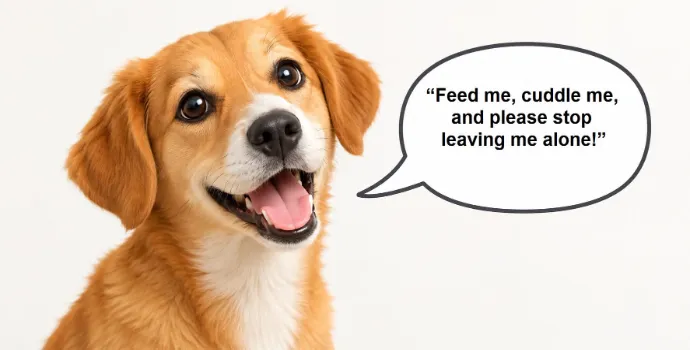
If Pets Start Talking: If pets start talking, we would instantly understand their exact needs and feelings very clearly.
Have you ever looked into your pet’s eyes and wondered what they would say if they could talk? Imagine waking up one morning and hearing your dog say, “Good morning!” or your cat complaining about why dinner is late. If pets started talking, everyday life would suddenly become funnier, more emotional, and completely different.
Pets already communicate through sounds, body language, and behavior. But if they could actually speak human language, we would finally understand their thoughts, feelings, wishes, and even their little complaints.
Table of Contents
1. We Would Understand Our Pets Better
The biggest change would be communication. If your pet could talk, you would no longer have to guess why it is barking, meowing, hiding, or acting differently.
A dog might say, “I am hungry,” “I want to play,” or “I am scared.” A cat might simply tell you, “Please open the door!” This direct communication could create a much stronger bond between pets and their owners. (If Pets Start Talking)
2. Pet Care Would Become Much Easier
One of the most useful benefits of talking pets would be better healthcare. Pets cannot tell us when they are experiencing pain, which can make it difficult to identify health problems.
If pets could speak, they might explain exactly where they hurt or how they feel. They could tell us when they need a veterinarian, when something in their diet is causing discomfort, or when they are feeling unusually tired.
This could help pet owners provide faster and better care. (If Pets Start Talking)
3. Our Homes Would Become Much Funnier
Imagine your dog telling you about everything it did while you were away. Or imagine your cat giving you a detailed explanation about why it knocked a glass off the table!
If your pet started talking, there would probably be endless funny conversations. Pets might have their own opinions about food, toys, walks, visitors, and even other animals in the neighborhood.
Life with pets would become a constant source of laughter and entertainment. (If Pets Start Talking)
4. Pets Could Tell Us What They Really Want
Sometimes, we buy toys, beds, or food that our pets simply do not like. A talking pet could solve this problem immediately.
Your dog might say, “I prefer chicken-flavored treats,” while your cat might explain, “That expensive bed is nice, but I still prefer this cardboard box.”
Understanding their preferences would make it easier to keep pets comfortable and happy. (If Pets Start Talking)
5. Talking Pets Could Teach Us Important Lessons
Pets might also teach humans about emotions, loyalty, friendship, and kindness. They could explain how they experience loneliness, happiness, fear, excitement, and love.
Hearing these thoughts directly could encourage people to treat animals with greater understanding and compassion. (If Pets Start Talking)
6. It Could Create New Responsibilities
Although talking to pets sounds wonderful, it could also create challenges. Once animals could clearly express their feelings, humans would have an even greater responsibility to listen to them.
We might need to reconsider how we treat, train, feed, house, and care for animals. Their voices could remind us that pets are not simply possessions—they are living companions with individual personalities and needs. (If Pets Start Talking)
Conclusion
If pets started talking, the world would never be the same. We would understand them better, laugh with them more, care for them better, and build deeper relationships with our furry friends.
Maybe pets do not need human words to communicate. Their wagging tails, gentle purrs, excited jumps, and loving eyes already tell us a lot. Still, imagining what pets would say if they could talk is a wonderful reminder of just how special our bond with animals can be. (If Pets Start Talking)
Visit our Etopcollection and “Dnyanjyot” educational website.