
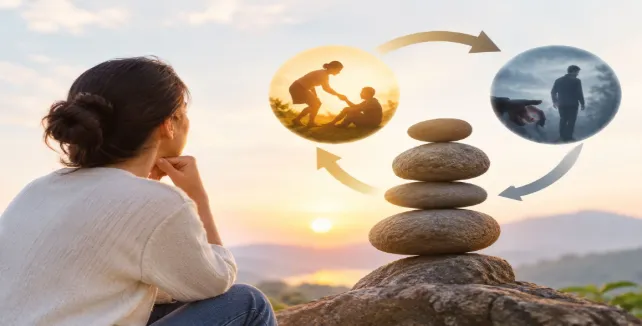
Do You Believe in Karma? Karma is a natural law where actions create consequences, shaping our present and future experiences.
Do you believe in karma? For centuries, karma has been a powerful idea across cultures, religions, and philosophies. The simple belief that our actions have consequences encourages people to think carefully about what they say, do, and choose. But karma is more than the popular saying, “What goes around comes around.” It can also be understood as a philosophy of responsibility, intention, and personal growth.
Table of Contents
1. What Is Karma?
The word karma comes from an ancient Sanskrit term meaning “action” or “deed.” In several Indian philosophical and religious traditions, karma refers to the relationship between actions and their consequences.
Karma is often misunderstood as an instant reward-and-punishment system. In traditional perspectives, however, karma can be much more complex. It emphasizes that actions, intentions, and choices can influence future experiences.
In everyday life, this idea can be interpreted simply: our choices create consequences, and our behavior can shape our relationships, habits, and future opportunities.
2. Do You Believe in Karma?
Whether you believe in karma is a personal decision. Some people see karma as a spiritual law, while others understand it as a practical principle of life.
For example, if you regularly treat people with kindness and respect, you may build stronger relationships and develop a positive reputation. On the other hand, dishonesty or harmful behavior can damage trust and create problems over time.
This doesn’t mean that every good person will always receive good outcomes or that every harmful person will immediately face consequences. Life is more complicated than that.
3. 7 Reasons People Believe in Karma
1. Karma Encourages Personal Responsibility
The concept of karma encourages people to take responsibility for their actions rather than blaming others for every outcome.
2. Your Actions Affect Others
A small act of kindness can make someone’s day better, while careless words can cause lasting hurt. Karma highlights the impact our behavior can have on other people. (Do you believe in karma?)
3. Karma Promotes Positive Behavior
Believing that actions matter can motivate people to practice honesty, compassion, patience, and generosity.
4. It Encourages Self-Reflection
Karma can inspire us to ask important questions: Am I treating people fairly? Are my choices aligned with my values? What can I learn from my mistakes? (Do you believe in karma?)
5. Karma Can Teach Patience
The consequences of our choices aren’t always immediate. Sometimes, personal growth and the results of our decisions take time.
6. It Can Help People Learn From Mistakes
Rather than viewing mistakes only as failures, karma can encourage a person to understand their actions, accept responsibility, and make better choices in the future. (Do you believe in karma?)
7. It Encourages Mindful Living
Thinking about the consequences of our words and actions can help us become more conscious of how we behave every day.
4. Karma vs. “What Goes Around Comes Around”
The popular phrase “what goes around comes around” is often used as a modern interpretation of karma. However, the traditional concept is broader than simply expecting someone to be rewarded or punished.
Karma can involve intention, action, consequence, learning, and personal transformation. It is therefore better understood as a philosophical and spiritual concept rather than a guaranteed system of instant justice. (Do you believe in karma?)
5. Does Karma Really Work?
There is no simple scientific test that proves karma as a supernatural law. However, some effects associated with karma can be explained through ordinary social and psychological processes.
For instance, kindness can strengthen relationships, honesty can build trust, and repeated negative behavior can damage someone’s social connections. In this sense, our actions can certainly influence the environment and relationships around us.
6. Conclusion
So, do you believe in karma? The answer depends on your personal beliefs and understanding of life. Whether you view karma as a spiritual principle or as a reminder that actions have consequences, its central message can encourage thoughtful living.
Every day, we make choices that affect ourselves and others. Choose kindness, act responsibly, learn from mistakes, and be mindful of your intentions. Even without knowing exactly what the future holds, these principles can help to create a more meaningful and positive life.
- What do Most People Read?
- Better Habits for Great Success
- The Places That Feel Like Homes
- Transform Your Life with Simple Habits
Visit our Etopcollection and “Dnyanjyot” educational website.