
What Book Are You Reading Right Now? Reading books increases knowledge by improving cognitive skills like concentration, memory, and critical thinking.
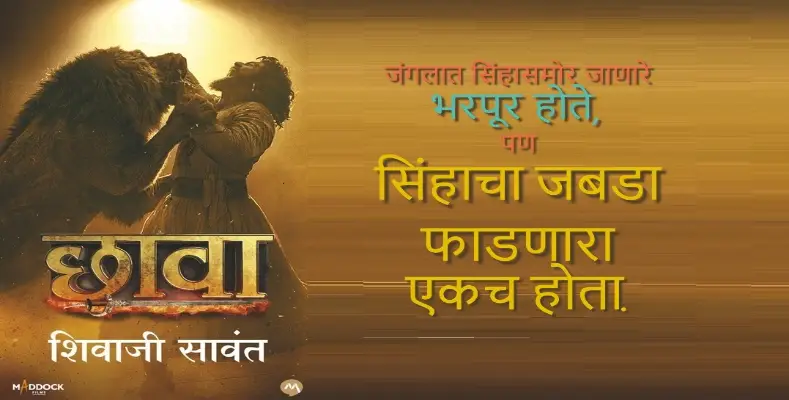
Currently, I am reading “Chhava”, one of the most powerful and emotionally gripping Marathi historical novels ever written. (What Book Are You Reading Right Now?)
Shivaji Sawant penned the book. He is the author of the timeless classic Mrutyunjay. Chhava explores the inspiring yet turbulent life of Chhatrapati Sambhaji Maharaj, the elder son of Chhatrapati Shivaji Maharaj. The book is rich in historical detail, emotional depth, and dramatic storytelling. Here’s what makes Chhava such an engaging read:
A Majestic Historical Narrative
The book offers a vivid portrayal of 17th-century India. It captures the political tensions and cultural dynamics. There is a constant clash between empires. Shivaji Sawant transports the reader into an era where honor, bravery, and sacrifice defined leadership. Every page feels like a window into real history.
Sambhaji Maharaj’s Life: Not Just a Prince, but a Warrior
Chhava isn’t merely a biography; it’s an emotional journey. Sambhaji Maharaj is depicted as an extraordinary figure. He was not only brave on the battlefield, but also well-educated. He was disciplined and sharp-minded.
The novel traces his struggles from childhood:
- His separation from his mother, Jijabai
- His challenging upbringing
- His clashes with the Mughal empire
- His unwavering loyalty to Swarajya
Reading this book helps one understand the depth of his character beyond the limited historical summaries we usually hear. (What Book Are You Reading Right Now?)
A Blend of Emotion and Valor
What sets Chhava apart is its emotional intensity. The dynamics of relationships are carefully narrated. The bond between Sambhaji and Shivaji Maharaj is shown with heartfelt sensitivity. His connection with his wife Yesubai, is also depicted with great care. Additionally, his loyalty to Swarajya is illustrated sensitively.
Moments of love, loss, pain, and triumph are woven beautifully into the story, making it both inspiring and heart-wrenching. (What Book Are You Reading Right Now?)
A Tribute to Sacrifice
One of the strongest aspects of the book is how it highlights the unimaginable hardships faced by Sambhaji Maharaj. His sacrifices—both personal and political—show what it truly meant to protect and expand a kingdom.
Shivaji Sawant ensures readers feel the weight of these decisions, making Chhava a tribute to courage and determination. (What Book Are You Reading Right Now?)
Rich, Poetic Writing Style
Shivaji Sawant’s narrative style is detailed, elegant, and emotionally charged. His descriptions of war, palace life, and nature are almost poetic. Even if one isn’t familiar with Maratha history, the storytelling remains engaging and easy to visualize. (What Book Are You Reading Right Now?)
Why This Book Stands Out for Me
Reading Chhava right now has been an enlightening experience. It is not just a historical novel but a reminder of:
- Leadership rooted in values
- The cost of building and protecting one’s ideals
- The strength of the human spirit under extreme pressure
The book inspires pride, reflection, and admiration. Every chapter makes me pause and think about how history is shaped by individuals who dared to stand strong despite overwhelming odds. (What Book Are You Reading Right Now?)
Conclusion
Chhava is a journey through bravery, sacrifice, and devotion. If you love historical fiction or want to understand the legacy of the Maratha empire, this is a must-read. It leaves a lasting impact on your mind. It also touches your heart. This makes it one of the most memorable books you can pick up. (What Book Are You Reading Right Now?)
Visit our “Etopcollection” and an educational website, “Dnyanjyot“
[pt_view id=”55cff900qc”]
One reply on “What Book Are You Reading Right Now?”
Torah faith understood differently that the Xtian avoda zarah treif abomination – guilty of the Shoah.
The Talmud rejects the Xtian simplistic reading of the Jewish Torah. Israel only accepted the opening first two commandments until Moshe came down from Horev following the sin of the Golden Calf avoda zarah wherein the ערב רב שאין יראת שמים translated the Spirit Name to a profane word “אלהים”.
Why the repetition of the so called 10 commandments in the Books of Sh’mot and D’varim? Torah a common law legal system. Paul’s declaration: “Goyim you are not under the Law” morphed Jewish common law with Roman statute law. Wrong – big error of Xtian theological propaganda. Common law stands upon the foundation of precedents. The repetition of the so called 10 commandments emphasizes through this central repetition the remembrance of coming out of Egyptian slavery as commanded in the acceptance of the Yoke of Heaven commandment known as kre’a shma. שמע ישראל ה’ אלהינו ה’ אחד.
Churchianity reads this as Monotheism. Again dead as a doornail – Wrong. Monotheism violates the 2nd Sinai commandment. If only One God then no need to forbid the worship of other Gods. The entire Torah revelation hinges upon these opening first two commandments, which Israel accepted before the sin of the Golden calf word translation av tuma avoda zara.
The bible translation ignores the first commandment. The translation of the 1st commandment Spirit Name to a word defines the sin of the Golden Calf … the 2nd Sinai commandment. Just that simple, no fancy dance’n.
Notice that the שמע employs 3 Divine Names. Only the revelation of the Oral Torah at Horev does another verse ה’ ה’ אל רחום וחנון וכו — the revelation of the Oral Torah 13 tohor middot — like the שמע, this verse too employs 3 Divine Names in succession. Within the entire literature of the T’NaCH, these two verse stand totally unique.
This has nothing what so ever to do with the Nicene Creed theology of 325 hocus pocus father, son & holy ghost pie in the sky creation of Gods through theology. The Book of בראשית where the 3 Avot swore an oath brit alliance concerning the future born birth of the chosen Cohen people. This first Torah Book introduces “how” this brit sworn to the Avot achieved.
Acceptance of the yoke of the kingdom of heaven requires that ALL down stream generations remember the oaths which the Avot swore to cut a brit alliance with HaShem – upon their World to Come/Olam Ha’Bah souls – the birth in all future born generations of the chosen Cohen people. Created not through sex but rather through observance of tohor time oriented commandments. The Book of בראשית introduces this unique type of Torah commandment.
The Nazis av tuma accused Jews of being a “race”. The Book of בראשית teaches otherwise. The Cohen people live from generation to generation through Jewish observance of time oriented commandments … קריא שמע an example of time oriented commandments which the Book of בראשית introduces with the משל of the Creation of the Universe in 6 days.
Torah instructs through משל\נמשל. Torah does not define faith as belief in this Trinity God or that strict Monotheism Allah God; it does not link faith to belief in the Greek Gods of Mt. Olympus or the multitude of Hindu Gods etc. The arrogance of Monotheism presumes that believers in Allah as the only God can negate the peoples of Asia and their belief systems!
The precedent of Moshe standing before the Court of Par’o on the matter of the Egyptian overlords beating the Israelite slaves, over their failure to meet our quota of brick production when Par’o withheld the required straw … coupled with Yetro, Moshe’s father in law, who rebuked Moshe over his failure to establish courts of law; upon these two essential Torah precedents of common law, stands the commandment – according to all the prophets of the NaCH – for Israel to invade and conquer Canaan. Specifically: To rule the conquered land with courtroom judicial justice as the Torah act of Sinai faith. Justice where the common law court dedicate to make fair restoration of damages inflicted upon others. That’s the entire Torah NaCH Mishna Gemara Talmud Midrashim and Siddur – just that simple. No fancy dance’n.