
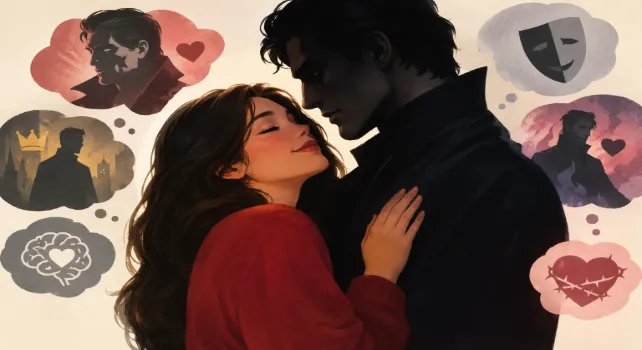
The Psychology of Loving Villains: We love villains because they express our dark impulses safely and feel more humanly flawed.
Villains have always fascinated audiences. From comic-book antagonists to morally complex characters in movies and TV shows, some villains become more popular than the heroes. But why do we find ourselves loving villains, sympathizing with them, or even rooting for them? (The Psychology of Loving Villains)
The answer lies in a combination of psychology, storytelling, emotional identification, and our fascination with the darker side of human nature.
Table of Contents
1. Villains Are Often More Complex Than Heroes
One major reason people love villains is character complexity. Traditional heroes are often presented as good, honest, and morally predictable. Villains, however, may have conflicting emotions, personal struggles, painful histories, and questionable motivations.
This complexity makes them feel more human. When a villain has understandable reasons for their actions, audiences may begin to empathize with them—even when they don’t agree with what the character does.
2. We Are Fascinated by the Dark Side
Human beings naturally have curiosity about things that are forbidden, dangerous, or socially unacceptable. Villains represent a fictional opportunity to explore these darker impulses safely.
Through a villain, audiences can experience anger, revenge, ambition, rebellion, or power without actually acting on those feelings themselves. This is sometimes connected to the psychological concept of the shadow, popularized by Carl Jung, which describes aspects of ourselves that we may repress or reject.
3. Villains Give Us a Sense of Freedom
Many memorable villains break rules and challenge social expectations. Their willingness to ignore conventions can feel liberating to audiences.
A villain may say what others are afraid to say, reject authority, or pursue goals without worrying about social approval. While their actions may be destructive, their independence can still be psychologically appealing.
4. We Sometimes Understand Their Motivation
A compelling villain rarely thinks, “I am evil.” Instead, they often believe they are correcting an injustice, protecting someone, gaining freedom, or creating a better world.
When audiences understand a character’s motivation, empathy can develop even when moral agreement does not. We may dislike what the villain does while still understanding why they believe they are doing it. (The Psychology of Loving Villains)
5. Charisma Makes Villains Attractive
Charisma plays a powerful role in how audiences perceive fictional villains. Confidence, intelligence, humor, style, and strong dialogue can make an antagonist extremely memorable.
This is why a well-written villain can sometimes attract more attention than the protagonist. The character’s personality creates emotional engagement, making audiences curious about what they will do next. (The Psychology of Loving Villains)
6. Villains Can Represent Rebellion
Some villains become symbols of rebellion against systems, traditions, or authority. Their stories can resonate with people who feel frustrated by unfair rules or social expectations.
Importantly, enjoying a rebellious fictional character does not necessarily mean supporting their real-world behavior. Fiction allows people to explore controversial ideas from a safe distance. (The Psychology of Loving Villains)
7. The “What If?” Fantasy
Another psychological attraction is imagining an alternative version of ourselves.
A villain can represent the question: “What would happen if I stopped following the rules?”
This doesn’t mean audiences secretly want to become villains. Instead, fictional characters allow us to explore possibilities that would be unacceptable or impossible in everyday life. (The Psychology of Loving Villains)
8. Tragic Backstories Create Sympathy
A tragic past can significantly change how audiences interpret a villain. Childhood trauma, betrayal, rejection, loss, or injustice may provide context for their transformation.
A backstory does not necessarily excuse harmful behavior, but it can make the character emotionally understandable. This distinction is important: understanding a villain is not the same as approving of the villain. (The Psychology of Loving Villains)
9. Villains Challenge Our Definition of Good and Evil
The most memorable villains often blur the traditional line between good and evil. They force audiences to ask difficult questions about morality, justice, revenge, and responsibility. (The Psychology of Loving Villains)
This moral ambiguity is one reason audiences continue discussing certain villains long after a movie or series ends.
Conclusion
The psychology of loving villains is ultimately about more than simply liking “bad guys.” Villains can embody complexity, rebellion, ambition, forbidden desires, vulnerability, and moral uncertainty. They allow us to explore uncomfortable parts of human nature while remaining safely within fiction.
The most compelling villains don’t just oppose heroes—they challenge audiences to question what makes someone good, bad, justified, or redeemable. That psychological complexity is often what turns a fictional villain into an unforgettable character. (The Psychology of Loving Villains)
- The Most Amazing Street Discoveries
- Life Advice for the Younger Generation
- 5 Annoying Tropes in Books and Movies
Visit our “Etopcollection” and an educational website, “Dnyanjyot“